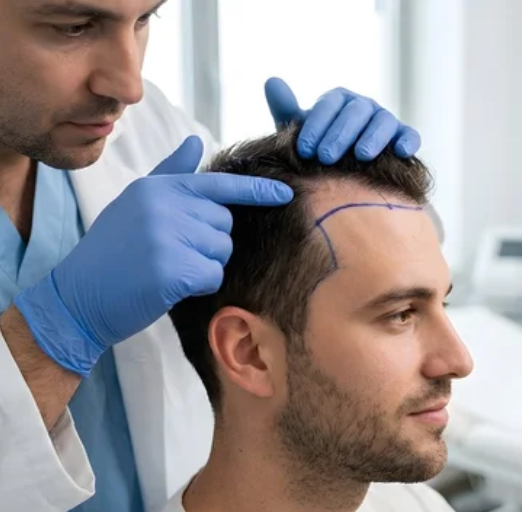
A hair transplant is the only truly permanent way to restore hair to a bald area — and in Singapore it’s also a five-figure decision. Before you book a consultation, it’s worth understanding what’s actually involved, what it really costs, and whether you’ve exhausted the cheaper, less invasive options that could delay or even remove the need for surgery. This guide walks through it honestly.
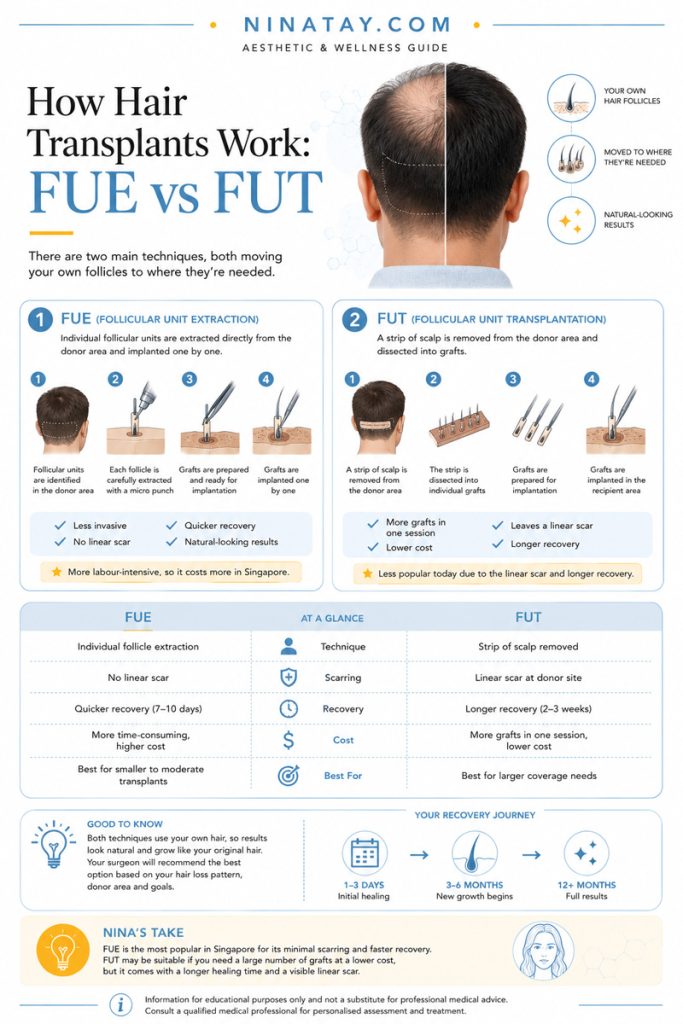
How hair transplants work: FUE vs FUT
There are two main techniques, both moving your own follicles to where they’re needed.
FUE (Follicular Unit Extraction)
Individual follicular units are extracted directly from the donor area and implanted one by one. It’s the more popular choice in Singapore because it’s less invasive, avoids a linear scar, and offers quicker recovery and natural-looking results. Because it’s labour-intensive for the surgical team, it costs more.
FUT (Follicular Unit Transplantation)
A strip of scalp is removed from the donor area and dissected into grafts. It can yield a large number of grafts in one session and may cost less, but it leaves a linear scar and has a longer recovery, so fewer patients choose it today.
What does a hair transplant cost in Singapore?
Pricing is usually per graft, typically $5 to $10 per graft depending on complexity and technology. In total, a typical FUE transplant runs about $6,000 to $15,000, and FUT roughly $6,000 to $12,000. The biggest cost factors are the number of grafts you need and the surgeon’s experience — MOH-certified, highly experienced surgeons charge more, but that experience is exactly where safety and natural results come from.
Results, recovery and risks
Around 90% of transplanted grafts typically survive and grow. You’ll see early regrowth within a few months, but full results take up to a year as the transplanted hairs mature. Recovery from FUE is relatively quick, though the scalp needs careful aftercare. Risks — as with any surgery — include infection, scarring, and results that don’t meet expectations, which is why surgeon choice and realistic expectations matter so much.
Before you go surgical: the alternatives
A transplant is worth it for the right person — but many people don’t need one yet, or aren’t good candidates. If your loss is still progressing, or you’re not fully bald, less invasive options can preserve and thicken what you have, and are far cheaper.
- Medication: Minoxidil and (for men) finasteride can slow loss and regrow hair, and are often used before and after a transplant anyway.
- Regenerative treatments: PRP and exosome therapy stimulate existing follicles — see our guide to exosome hair treatment in Singapore.
- In-clinic scalp treatments: Drug-free options like plasma scalp boosters treat the root environment and support follicle health.
For the full picture of non-surgical options and how they compare, read our guide to hair loss treatments in Singapore compared.
Nina’s Top Pick 2026
Anagen Scalp — Plasma Scalp Boost (Non-Surgical)
Pacific Plaza, Scotts Road · Drug-free · Diagnostic-first
Before committing to surgery, Nina recommends exhausting the non-surgical route. Anagen Scalp’s Plasma Scalp Boost takes a diagnostic-first, drug-free approach to reactivate follicles and treat the root cause — often the smarter, far cheaper first step, and a good way to find out whether you really need a transplant at all. First trial from $38.
Frequently asked questions
The bottom line
A hair transplant is worth it for the right candidate — stabilised loss, a good donor area, an experienced surgeon and realistic expectations. But it’s a permanent, five-figure decision, and many people get excellent results from cheaper, non-surgical options first. Start with a proper assessment, exhaust the alternatives, and if you do go surgical, choose skill over price.
Related reading on NinaTay:
This article is for general information and is not medical advice. Always consult a licensed doctor about treatments suitable for you.