Singapore has some of the highest rates of childhood myopia in the world — by the time they finish primary school, the majority of children here are short-sighted. The good news for parents: myopia is no longer something you just watch get worse each year. Modern myopia control can meaningfully slow how fast a child’s short-sightedness progresses, protecting their eyes long-term. This guide explains the main options, how they compare, and what they cost in 2026.
Why myopia control matters
Myopia isn’t just an inconvenience that stronger glasses fix. As the eyeball elongates, the risk of sight-threatening conditions later in life — retinal detachment, myopic maculopathy, glaucoma — rises with the degree of myopia. Slowing progression in childhood, when the eye is growing fastest, reduces that lifelong risk. That’s the whole point of myopia control, and why starting early matters.
The main myopia control options
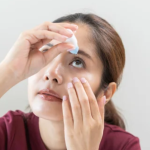
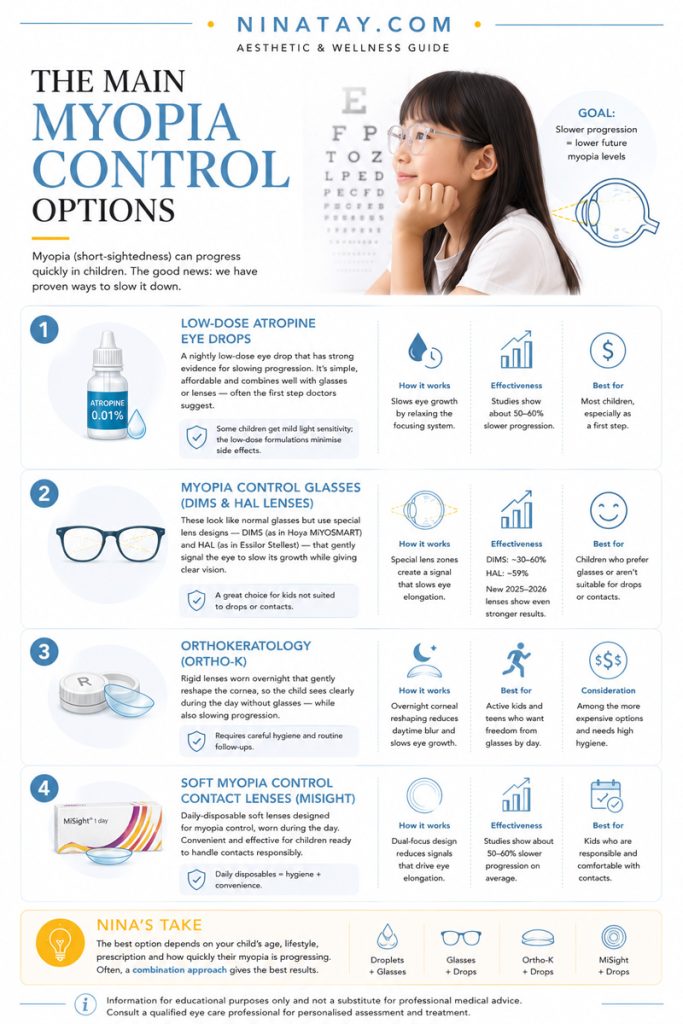
1. Low-dose atropine eye drops
A nightly low-dose eye drop that has strong evidence for slowing progression. It’s simple, affordable and combines well with glasses or lenses — often the first step doctors suggest. Some children get mild light sensitivity; the low-dose formulations minimise side effects.
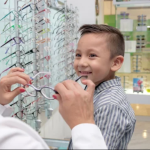
2. Myopia control glasses (DIMS & HAL lenses)
These look like normal glasses but use special lens designs — DIMS (as in Hoya MiYOSMART) and HAL (as in Essilor Stellest) — that gently signal the eye to slow its growth while giving clear vision. Studies show meaningful reductions in progression: DIMS lenses around 30–60%, and HAL lenses roughly 59%. Newer 2025–2026 versions report even stronger results. They’re a great choice for kids not suited to drops or contacts.
3. Orthokeratology (Ortho-K)
Rigid lenses worn overnight that gently reshape the cornea, so the child sees clearly during the day without glasses — while also slowing progression. Popular with active kids and teens, but they require careful hygiene and are among the more expensive options.
4. Soft myopia control contact lenses (MiSight)
Daily-disposable soft lenses designed for myopia control, worn during the day. Convenient and effective for children ready to handle contacts responsibly.
How they compare
| Option | How it’s used | Progression slowing | Typical SG cost/year |
|---|---|---|---|
| Low-dose atropine | Nightly drop | Strong evidence | Under ~$1,000 total |
| DIMS / HAL glasses | Daytime glasses | ~30–60% | Mid-range |
| Ortho-K | Overnight lenses | Effective | ~$1,000–$4,000 |
| MiSight contacts | Daytime soft lenses | Effective | ~$1,000–$4,000 |
How to choose for your child
Glasses or atropine suit…
- Younger children
- Families wanting a simple, lower-cost start
- Kids not ready to handle contact lenses
- Those combining methods under guidance
Ortho-K or contacts suit…
- Active kids who want glasses-free days (sports, swimming)
- Older children and teens
- Responsible lens-hygiene habits
- Families comfortable with higher cost
The most important step is a proper assessment and ongoing monitoring, so the plan can be adjusted as your child grows. For adults weighing their own eyewear, see our guides to the best optical shops in Singapore and best progressive lenses.
Nina’s Top Pick 2026
Visio Optical — Myopia Control & Bespoke Eyewear
Qualified optometrists · Myopia-control lenses · Careful, no-rush fitting
For myopia control done properly, Nina recommends Visio Optical. Rather than selling the priciest option, they assess your child, explain the choices — atropine-friendly lenses, DIMS/HAL myopia-control glasses and more — and fit the right solution with proper follow-up. Exactly the measured, expertise-first approach this decision deserves.
Frequently asked questions
The bottom line
In a country where most children become short-sighted, myopia control is one of the most valuable investments you can make in your child’s long-term eye health. The methods — atropine, myopia-control glasses, Ortho-K and soft lenses — all work, and the right mix is personal. Get a proper assessment, start early, and monitor regularly, and you’ll protect your child’s eyes for decades.
Related reading on NinaTay:
This article is for general information and is not medical advice. Always consult a qualified optometrist or eye doctor about your child’s eyes.