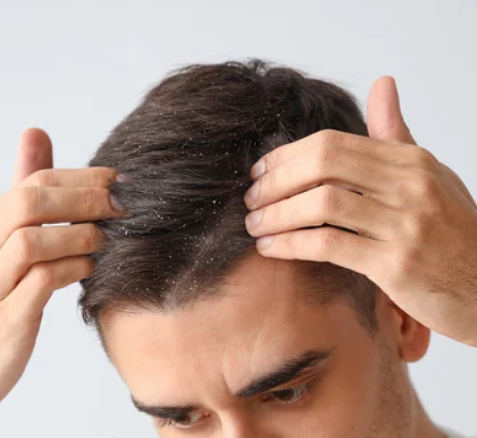
Flakes on your shoulders, a scalp that itches by afternoon, that tight, irritated feeling after a hot day — dandruff is one of Singapore’s most common scalp complaints, and the humidity here makes it worse. The good news: for most people it’s very manageable once you understand what’s driving it. Here’s a clear guide to what causes dandruff and an itchy scalp, the ingredients that work, and a simple dandruff treatment routine you’ll actually keep up.
What causes dandruff and an itchy scalp?
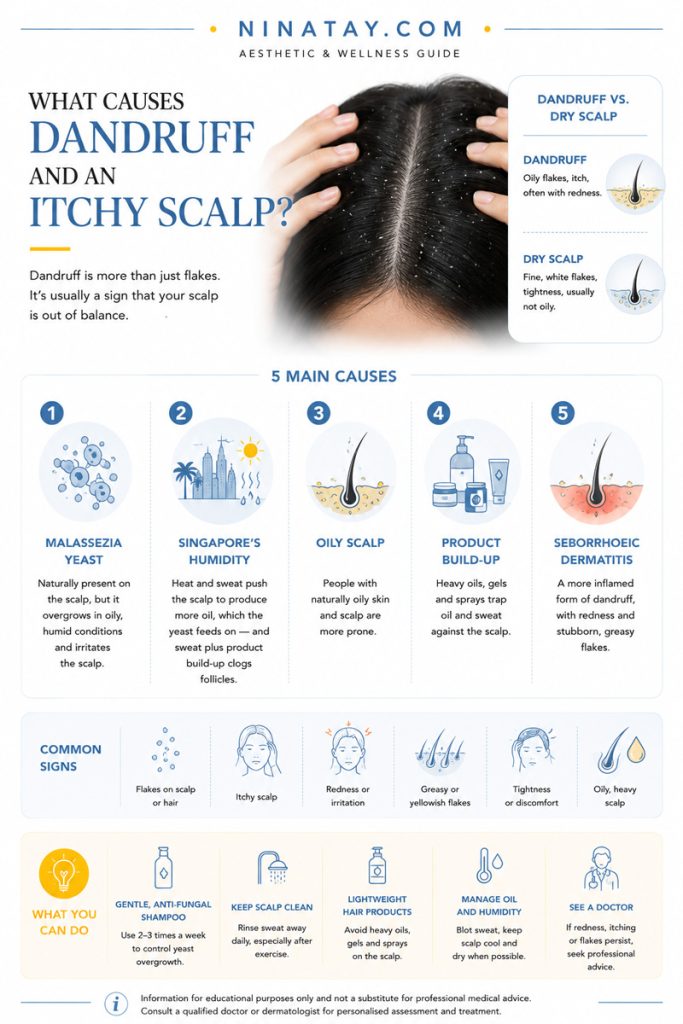
- Malassezia yeast: Naturally present, but it overgrows in oily, humid conditions and irritates the scalp.
- Singapore’s humidity: Heat and sweat push the scalp to produce more oil, which the yeast feeds on — and sweat plus product build-up clogs follicles.
- Oily scalp: People with naturally oily skin and scalp are more prone.
- Product build-up: Heavy oils, gels and sprays trap oil and sweat against the scalp.
- Seborrhoeic dermatitis: A more inflamed form of dandruff, with redness and stubborn, greasy flakes.
The ingredients that actually work
Effective anti-dandruff care comes down to a few proven active ingredients — look for these on the label:
- Zinc pyrithione: Antifungal and antibacterial — a reliable everyday workhorse.
- Ketoconazole: A stronger antifungal for more stubborn cases.
- Salicylic acid: Exfoliates flakes and clears build-up so other actives work better.
A simple, fuss-free homecare routine
You don’t need a ten-step regimen. Consistency beats complexity:
- Cleanse regularly with a gentle, scalp-focused product — especially after workouts or sweaty days.
- Use an active ingredient (zinc pyrithione or ketoconazole) a few times a week, leaving it on briefly so it can work.
- Exfoliate lightly once a week to lift flakes and build-up.
- Go light on styling products and heavy oils that clog the scalp.
- Support scalp health with gentle massage and lower stress, both of which help flare-ups settle.
A healthy scalp is also the foundation for healthy hair — the same environment that triggers dandruff can worsen shedding. See our guides to the best scalp treatment in Singapore and the causes of hair loss if flaking comes with thinning.
Nina’s Top Pick 2026
elihe laboratories — Fuss-Free Scalp Homecare
At-home · Scalp-science backed · Simple daily routine
For keeping an itchy, flake-prone scalp calm without a complicated regimen, Nina’s pick is elihe’s fuss-free homecare. It’s a science-backed routine that’s gentle enough for regular use — the easy, sustainable way to maintain a healthy scalp environment in Singapore’s humidity.
Frequently asked questions
The bottom line
Dandruff and an itchy scalp are common in Singapore — and very manageable. Understand that it’s driven by yeast, oil and humidity, use proven actives like zinc pyrithione or ketoconazole, cleanse regularly (especially after sweating), and keep a simple, consistent routine. Persistent or inflamed cases deserve a professional look, but for most people, fuss-free consistency is the fix.
Related reading on NinaTay:
This article is for general information and is not medical advice. See a doctor or trichologist about persistent or severe scalp problems.